


Prepare PA/eReporting flows and monitor statuses
Objective. Classify electronic-invoicing objects, prepare reliable source data and read lifecycle evidence without treating an empty history as proof of transmission.
Before you start: select the invoice to qualify
In your subscription, select an issued invoice you may view whose customer has a verifiable country, legal identity, billing address and tax identifiers. If a payment is linked, record its reference, date and status. Confirm access to cockpit and histories, but trigger no transmission during the training.
Route to prepare
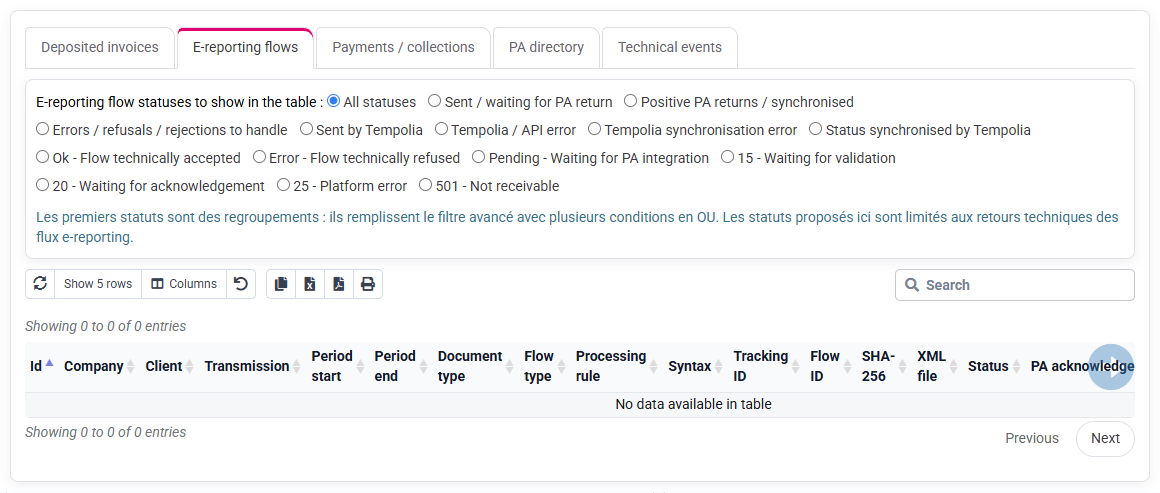
Use the customer, optional matter, invoice and any linked payment or rejection that you selected. First determine the intended B2B, eReporting and payment routes from country, identifiers, VAT and transaction context. Read the PA/eReporting histories for the selected scope. An empty table means that no matching row is visible; it does not prove a sent or accepted object.
Prerequisites
- Your issuing company, platform and period are selected in your subscription.
- The selected customer’s legal identity, address, country, SIRET and VAT data are reviewed.
- No real submission is triggered. Empty history remains an explicit test finding.
70-minute schedule
- 8 min: classify objects.
- 12 min: inspect company, client and period.
- 15 min: prepare the invoice route.
- 15 min: review eReporting criteria.
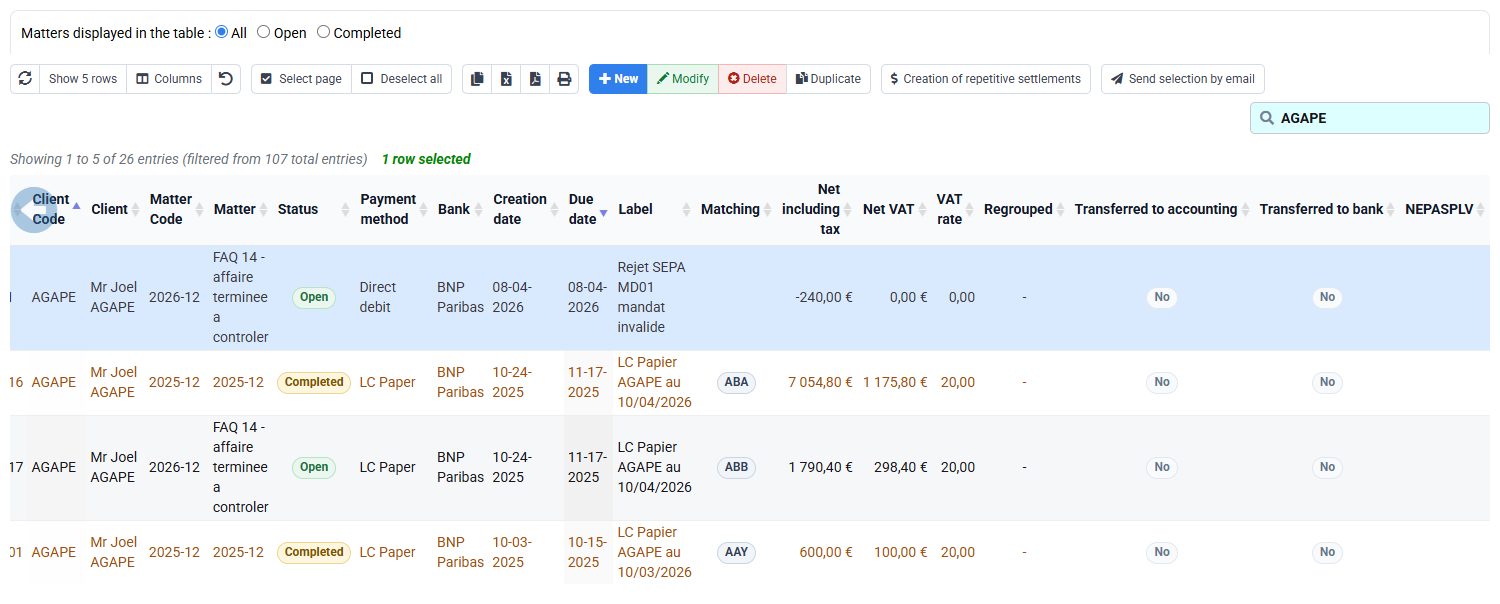
- 12 min: inspect payment and RJMD01.
- 8 min: diagnose empty histories and document next action.
Understand the lifecycle
The cockpit proposes actions; history proves acknowledgements and status changes. A PDF, selected population or clicked button is not a platform response. Keep preparation, submission, technical acknowledgement, acceptance, rejection, correction and resubmission distinct. Correct client, company, VAT, invoice or payment source data rather than hiding a structured error in wording.
1. Verify routing data and population
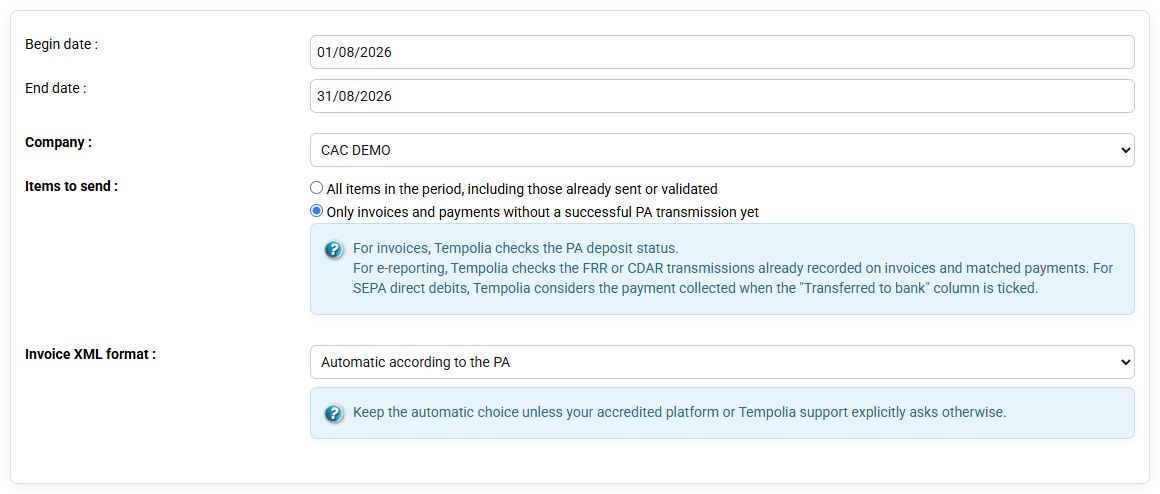
Find 18100016 in the sales journal and verify AGAPE, 2026-12, EUR 300.00, company and issued status. Inspect client identification and PA/eReporting tabs, then platform and period options. A populated source invoice is evidence; an empty PA history is only a prerequisite diagnosis.
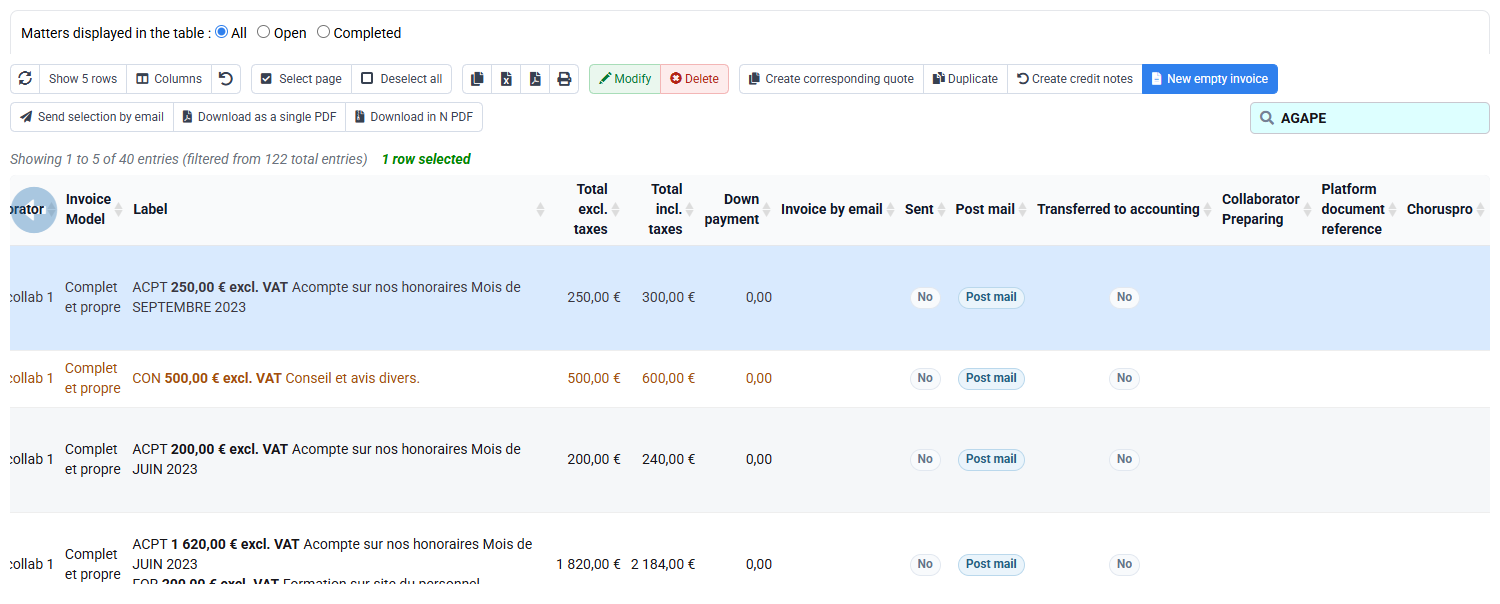
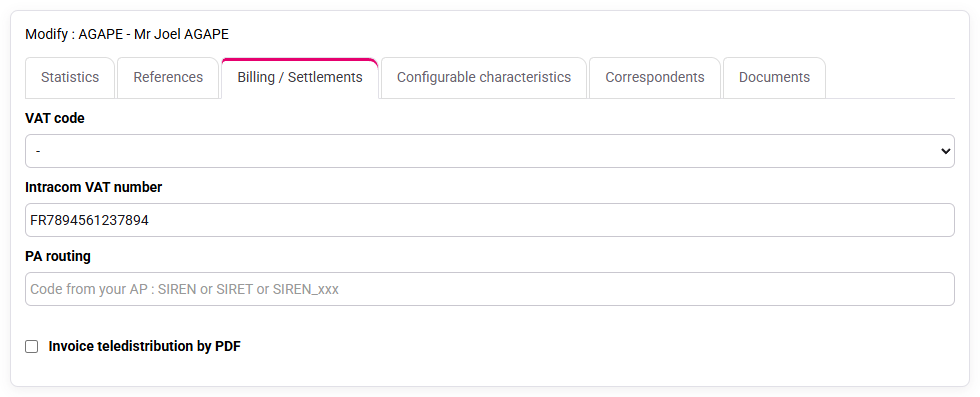

2. Read cockpit and histories honestly
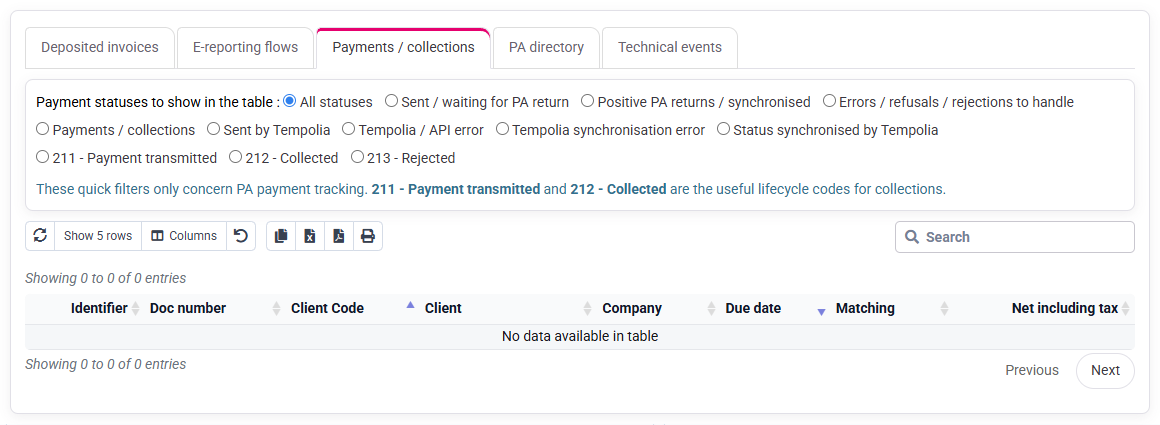
Review the cockpit population and period without sending. Open invoice, eReporting and payment histories. If they contain no rows, record database, company, period, platform and expected identifier, then stop. Do not create a caption claiming transmission. For RJMD01, connect the rejection code to the original mandate/payment and document the authorised correction decision.
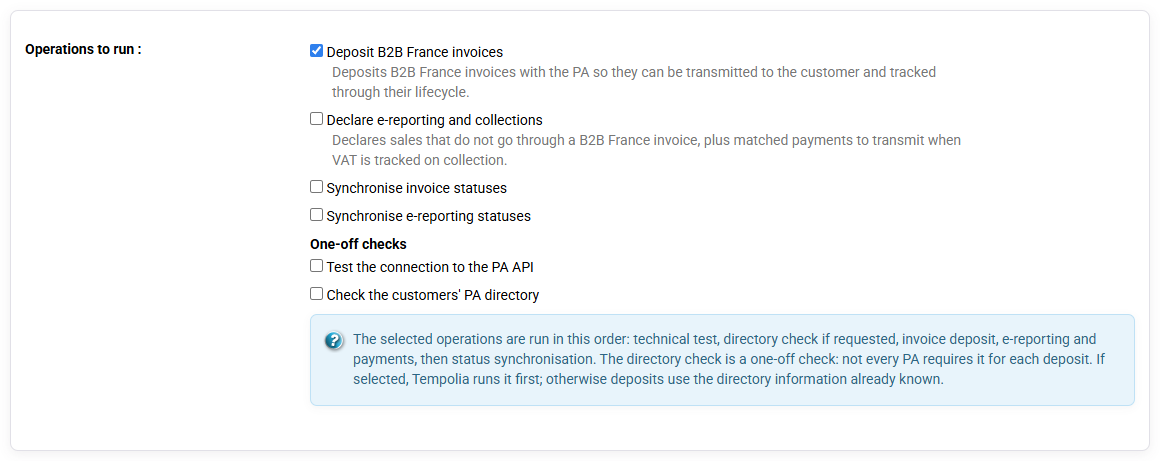
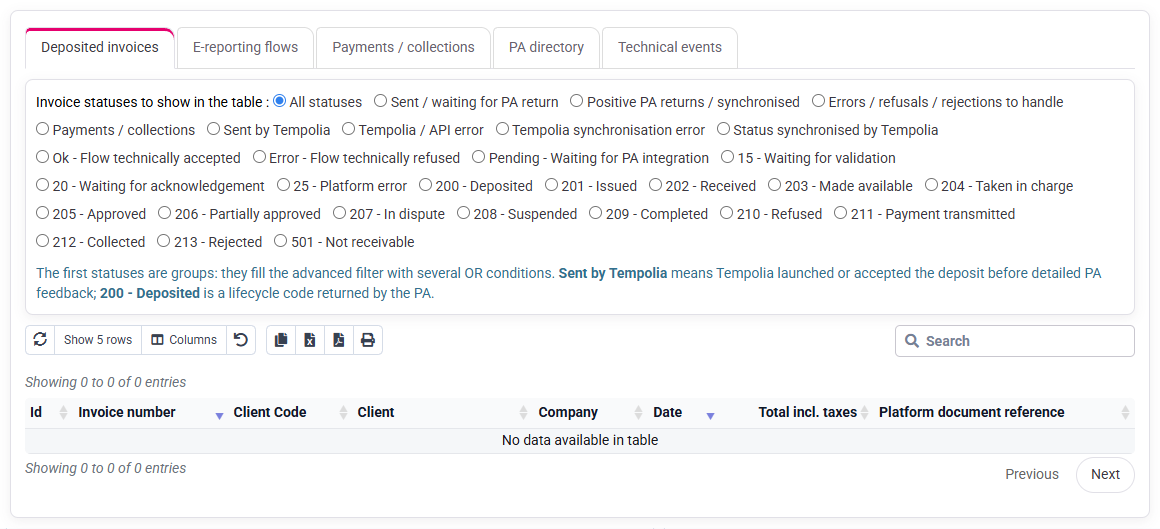
Guided outcome and diagnosis
- 1. Qualify 18100016 from source data.
- 2. Inspect the three histories without submission.
- 3. Link RJMD01 to its payment context and write the next authorised action.
- Invoice, customer, amount and intended route are documented.
- Empty histories are labelled unavailable evidence.
- No object is resent without reading a real return.
If 18100016 is absent, check company, period and issued state. If history is empty, verify platform configuration and test data; do not infer success. If RJMD01 is unclear, inspect mandate, rejection and original payment before deciding.
Build the qualification sheet before opening the cockpit
Create one line per object with source reference, seller, buyer, country, B2B/B2C status, totals, VAT treatment, issue date, payment basis and expected route. For 18100016, copy values from the issued invoice and AGAPE record. Add expected action, prerequisite, history searched, row found, returned status and next authorised decision. The sheet prevents sending first and understanding later.
Qualification is a business decision supported by data. French B2B, B2C, international and cash-basis payment objects need not share a route. Country or VAT number alone is insufficient: inspect customer type and context. When evidence is missing, write “not demonstrated” and the source to complete.
Concrete exercise
- Copy 18100016, EUR 300.00, AGAPE and 2026-12.
- Read seller and buyer identifiers at source.
- Write the expected route before opening the cockpit.
- Search all three histories using one company, period and reference.
- Record zero rows as the search result, not an accepted status.
Read statuses as a chronology
A chronology links source, eligibility, preparation, submission request, technical acknowledgement, platform processing, acceptance or rejection, correction and payment information. Each step needs time, actor, reference and evidence. A cockpit “to do” line is pre-submission. A local sent flag without remote acknowledgement cannot prove receipt. A rejection identifies a failed external stage; it does not erase the commercial source.
For a real return, reconcile identifier, company, amount and date before interpreting it. Read the detailed message, then locate the source: customer identity, seller, VAT, line, payment, routing or connection. Apply only the authorised correction, retain the earlier return and explain why one new attempt is permitted.
Empty-history diagnosis
- Confirm database, company and access rights.
- Expand dates while keeping the unique reference.
- Verify platform configuration.
- Confirm whether an authorised submission actually occurred.
- If none occurred, define a prepared future test.
Treat RJMD01 as a separate payment exception
A SEPA rejection remains connected to mandate, RUM, collection reference, due date, bank, expected payment and customer account. RJMD01 is the exercise identifier, not a universal accounting conclusion. Read the actual code and reason, then decide through the authorised process whether to represent, correct mandate data or request another method.
Do not mark 18100016 paid because a debit was prepared. Expected collection, bank file, acceptance, rejection, payment entry and matching are distinct. If an entry exists despite rejection, reconcile customer movements before payment reporting. Preserve rejection date and link.
Evidence package
- Invoice and customer identifiers.
- Mandate and collection reference where applicable.
- Actual rejection row or explicit unavailability.
- Customer-account and matching consequence.
- Approved next action, owner and deadline.
Prepare the future authorised end-to-end test
Because current histories are empty, define rather than execute the missing test: a dedicated invoice with known classification, complete parties, controlled period and unique reference. Record expected cockpit population. After authorisation, capture request, acknowledgement and first remote status. Retain any rejection and demonstrate source correction plus one resubmission. If successful, verify history object and amounts.
Acceptance is not a green screen. Another reviewer must start at the invoice, explain the route, locate the acknowledgement, interpret transitions and prove absence of duplication. A test without remote response validates only preparation; a remote response not reconciled to its source validates only transport.
Daily controls and mistakes
- Do not choose an operation only because its button is available.
- Do not alter periods until a convenient population appears without documenting scope.
- Do not present empty history as “no errors” or “everything sent”.
- Do not correct visible wording when structured source data caused rejection.
- Do not resubmit before reading the previous return.
- Do not confuse PA history, accounting export and customer matching.
- Do not treat a rejected debit as receipt.
Review unresolved objects by age and status, assign owners, and reconcile cockpit population, submitted, acknowledged, rejected and awaiting-decision counts. This detects silent gaps before month-end.
Reconcile the populations before period close
Build a control table with one row per expected object and columns for Tempolia reference, route, source-ready date, submitted identifier, acknowledgement, latest status, owner and next action. Count objects prepared, genuinely submitted, acknowledged, accepted, rejected and still awaiting evidence. Reconcile each transition: the submitted count cannot exceed source-ready objects without an explained exception, and every rejected item needs an owner. An empty history supplies zero observed external events; it is not a population of successful events.
Apply the same discipline separately to invoice, eReporting and payment histories. Do not copy a status between them. For invoice 18100016, retain AGAPE, matter 2026-12 and EUR 300.00 as the observed source anchor. Leave external columns unproved until an authorised test supplies a genuine identifier and response. If RJMD01 is visible, place it in the payment chronology only and link it to the original mandate and debit. It does not populate the invoice-rejection column.
Write a decision record another operator can execute
For every gap, state the observed fact, evidence, operational impact, next control, owner and completion criterion. A useful entry reads: “Invoice history empty for the documented company and period; 18100016 has no observed external identifier; transmission is unproved; run the authorised prepared test and retain identifier, acknowledgement and history row.” Avoid statements such as “platform problem” or “all clear” when the evidence does not support them.
Have a second operator reproduce the filters, source checks and chronology without your direct links. They must explain why a cockpit action is not an acknowledgement, why empty histories stop the proof chain and why a rejected SEPA debit does not establish a rejected invoice. The exercise passes when that operator can name the exact artefact needed to close every open column and knows not to resubmit before reading an authentic return.
Before you finish
Produce a chronology sheet separating source readiness from missing external evidence. A colleague must know exactly what can be proved today and which prepared test is required to obtain a genuine acknowledgement.
Step back
Mature e-invoicing control asks whether each object followed the right route once with a readable chronology. Automation may collect and validate; human review owns rejection interpretation and resubmission. Empty histories teach the boundary between readiness and proof: the source is qualifiable today, while external lifecycle evidence requires an authorised future test.